Queering Women, Peace and Security
Expanding Feminist Approaches to Gender in Peacebuilding
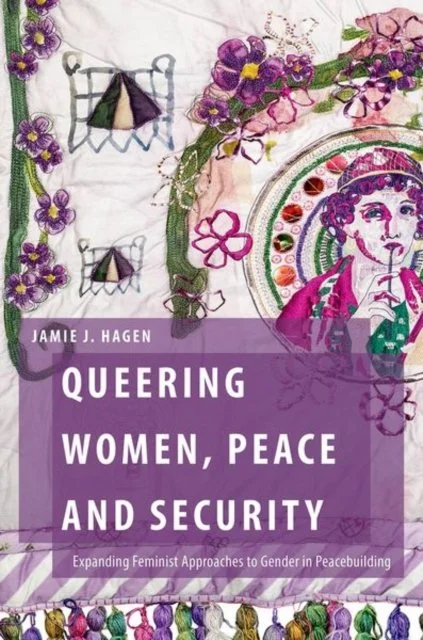
From queering peace and security in theory to queering in practice
Queering Women, Peace and Security fills this gap by applying queer theory to feminist efforts to ensure a gender perspective is promoted by the WPS agenda. Engaging with WPS documentation, examples of implementation, and interviews with practitioners, Jamie J. Hagen examines how the needs of LGBTQ people in conflict and peacebuilding are considered within the current architecture and practices. In particular, she identifies the interchangeable use of the words "gender" and "women," which betrays a larger analytical failure to think outside a binary categorization of gender. Informed by this analysis and interviews with leaders from Northern Ireland and Colombia, Hagen outlines steps those implementing the WPS agenda can take to work in collaboration with queer and trans communities in their gender, peace, and security work.
Addresses a gap in the understanding of how LGBTQ women factor within the United Nation's Women, Peace and Security agenda
Features interviews with practitioners of WPS to reveal their understandings of "gender" and "women"
Provides concrete recommendations for taking a more inclusive approach to gender in post-conflict peacebuilding
Includes insights from LGBTQ movements in Colombia and Northern Ireland
BOOK EVENTS (2026)
Upcoming events
16 September, 4:00pm, Boston, MA, University of Massachusetts Boston, Book release, Register here
17 September, 1:30 pm, NYC, NY, CUNY Law School of Law, Human Rights and Gender Justice Clinic (closed event)
17 September, 6 PM, NYC, NYC, The New School, Register here
22 September, 5 PM Washington, D.C., GW/Elliott School of International Affairs, Register here
25 September, 12CST New Orleans, LA, Tulane University, Newcomb institute, Register here
Past events
30 January, Joint Critical global politics book launch, University of Manchester
10 March, Virtual peace webinar series
20 March, Queer feminists for peace: Queering Women, Peace & Security book launch, The Portico Library, Manchester, UK
24 April, Queering Women, Peace Security, Jamie Hagen In conversation with Katharina Kehl, Swedish Defense University, Stockholm Sweden
Order or Access through Your Institution
Use code AUFLY30 for 30% off!
Scholars and Practitioners without an institutional affiliation, please be in touch!